Liaoning Province & Masculinity: Reflections on Armour & Vulnerability
Tales of my time in Liaoning Province, China.
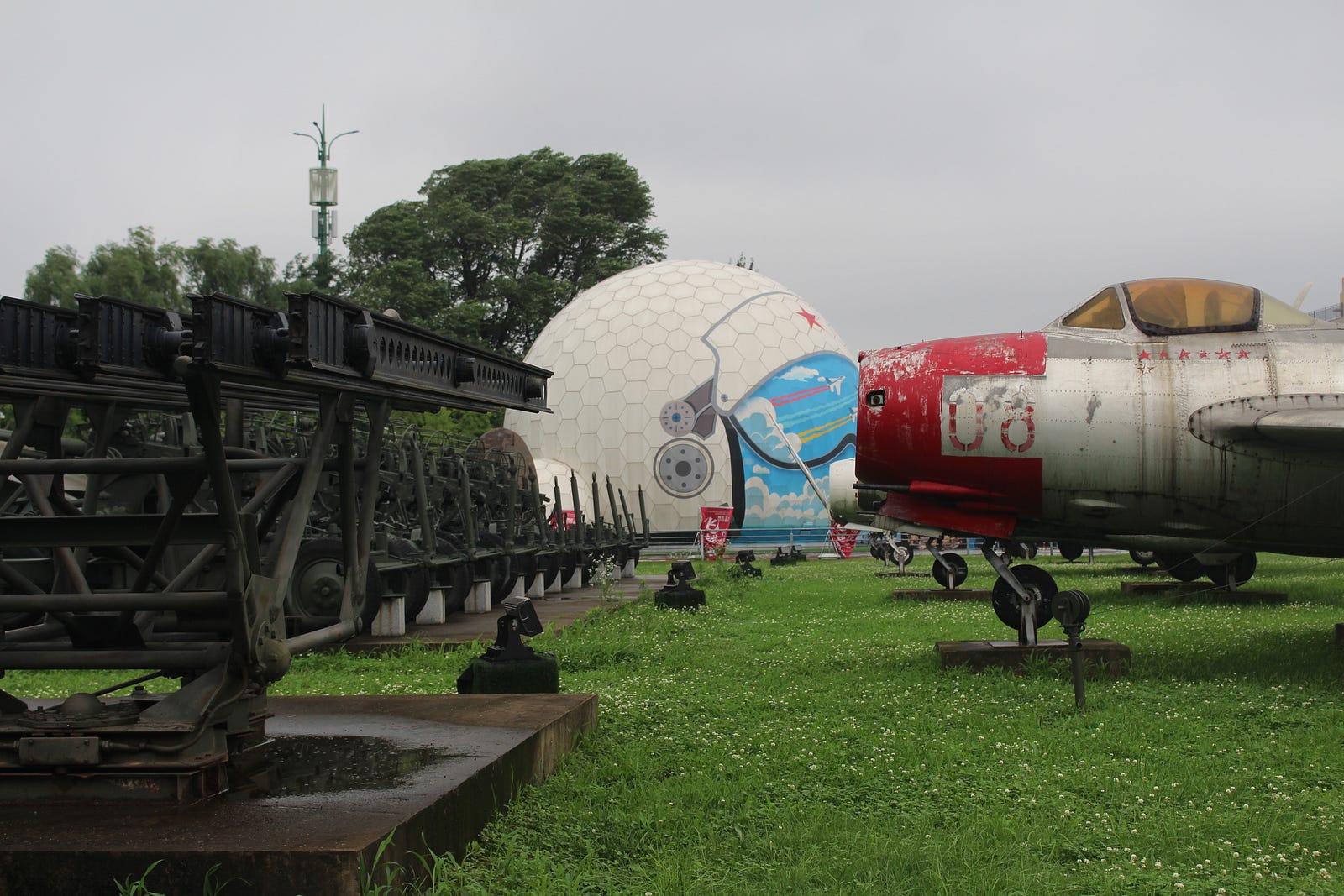
In 1644, the Manchu people—following the collapse of the Ming and establishing what would become the Qing dynasty, having recently conquered the Korean peninsula—stormed the outer plains of China, eventually setting their sights on Beijing. This spawned a dynasty lasting almost three hundred years through to modern China. Today, there are around 10 million Manchu people in China—less than 1% of the country’s total population—with almost all of them living in their former heartland, now known as Liaoning province.
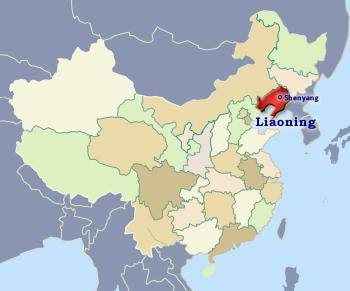
When asking some of my Chinese friends about my upcoming trip to Liaoning, I was essentially told that the capital, Shenyang—and the rest of the province, for that matter—are, depending on who you ask, the “hicks” of China. I was met with puzzled looks and repeated questions.
“Why travel there?!”
“You should see Shanghai, or the forbidden palace in Beijing”
Shenyang is not necessarily a rich city by Chinese standards, though it is the 15th largest in the country. Sandwiched between regional powers and historical crosswinds, it carries an unvarnished weight.
The guide for our trip, FanDi, was an administrator at the university. I met him on the first night, as he helped me navigate a crowded hostel adjacent to the campus. And oh boy, was I in desperate need of his help.
To be completely honest: I was stunned. The foyer was bustling with people of all nationalities. A large Black man, wearing what I later discovered was a traditional Senegalese boubou, looked me up and down and asked me in French if I spoke Arabic. (Do I look arabic?!) I was a bit taken aback to be honest.
Stumbling over my broken Chinese, I tried to explain that I was a student on a study tour. He raised an eyebrow, unconvinced, before turning back to explain something urgent to the lobby worker, gesturing emphatically with his hands. I stood there trying to follow the thread before being saved by FanDi. All smiles and authoritative energy, FanDi stepped in to talk with the receptionists. I attempted to joke that he was my saviour, but my “intermediate” Chinese level had clearly been severely overstated by Duolingo. I was met with blank stares all around.
Later that evening, I had to negotiate with a Russian who also spoke French just to figure out my room number, before being rescued once again—this time by a local Chinese English teacher.
The night lives on in my head as something akin to a fever dream: the shouting across four different languages, the raw culture shock, and food delivery robots dressed in small aprons gliding gracefully through the lobby delivering people’s meals.
After negotiating with the adjacent grocery store for milk, I was roped into smoking several bootleg North Korean cigarettes with the shop owner.
Despite the smiles, FanDi was initially quite guarded. Clearly a bit unsure of how to treat me with my limited language skills, we originally conversed via smiles and broken Chinese. Being in a foreign part of the world, in a new country, I peppered him with questions—although I can’t lie, I do this regardless of where I am in the world. Yet at first, like most men, especially older ones, he would not answer. I often wondered what his family was doing each night while he arrived early and stayed late for us, but he dodged the question whenever I asked. A joking facade lay between me and any sort of vulnerable response. Like a puzzle, I pushed and prodded: after all, he was with us for several weeks and could not escape (am I manipulative?)
Eventually he revealed the key to his vulnerable interior. I negotiated with the local university volunteers to learn authentic Dongbeiren slang—pieces of strategic local dialect that I then used to curry favour with him.
“Ni chou sha?” (What are you looking at, punk?) I dropped the line on him one day. My incessant efforts to practice the northern pronunciation had clearly paid off.
He turned, and his stern look melted into a bewildered smile as he realised what I’d said. Before long, he was calling me fat (peng) a liar (pianzi) a thief (zei), and undesirable—and me as well unto him.
In many ways, it reminded me of home. In Australian culture, I would say that we have a complex relationship between humour and a respect for authority. This was something I had trouble explaining to the volunteers at first as they refused to joke with me, fearing to potentially offend me (of course I had to assure them that it was quite the opposite!)
For the rest of our time together, FanDi naturally referred to me as Weishenme (”Why?”). Like a small child, I would relentlessly ask him why. Not just because it was a handy catch-all response and one of the few Chinese words I knew, but because I was enamoured with the new and exciting world around me. (coincidentally it was the only way I knew to muster up a conversation in chinese that wasn’t incredibly surface level)
I have to say, I was quite charmed by the attitude of not just FanDi, but most of the local Dongbeiren (northerners); One evening, looking forward to a quiet dinner, I went to order some local kao cha skewers. Having taken a train from Inner Mongolia earlier that morning, I was exhausted and simply wanted to review my Chinese notes for the day over food.
Not knowing the specific words for the meats on display, I resorted to my trusty fallback: asking the young staff member behind the counter for whatever his personal favourite was. Initially a bit guarded, after a brief back-and-forth over my pronunciation, it produced the desired effect of breaking the ice.
But my plans for a restful writing session were foiled when he pulled up a chair and sat right down across from me, staring expectantly at me as I ate. Peppering me with the occasional question.
I briefly toyed with the idea of making an excuse to ask him to leave, but it quickly became clear why he was regaling me. Having never left Liaoning province—let alone his city—Huangfei dreamed of starting a new life abroad. To him, an oddly dressed foreigner must surely be an expert on the outside world.
Like an awkward dance, we fell into a rhythm: me attempting broken Chinese, him attempting broken English, both peppered with vague hand gestures, until we inevitably gave in and turned to our wonderful fanyi guan (translation app).
I quickly gathered that despite being well over six feet tall, he was still just a young boy, his dreams heavily fueled by his family’s financial hardships. Liaoning province has faced steep economic stagnation in recent decades, and his ticket to university—his gaokao score—had fallen short, having achieved one of the lowest possible marks in mathematics, he explained to me. But what he lacked in textbook academic results, he more than made up for in sheer enthusiasm.
He told me all about his high school sweetheart, his ambitions of traveling the world to become a writer and photographer, while I persistently translated words of encouragement for him to hold onto those dreams. Shortly after, his grandmother called out, scolding him across the restaurant for chatting instead of bussing empty tables for new guests.
Huangfei’s story was not an isolated one. I met many strangers like him who, after a their initial guardedness had subsided, offered unconditional “northern hospitality” inviting me into conversations and sharing their lives.
I would be hard pressed not to draw the link between the heavy stoic armour of the traditional masculine spirit that FanDi and Huangfei initially showed me, and the province’s heavy, militaristic heritage. Home to significant defense manufacturing, several locals proudly boasted to me about Lioaning’s connection to the production of China’s advanced J-20 stealth fighter.
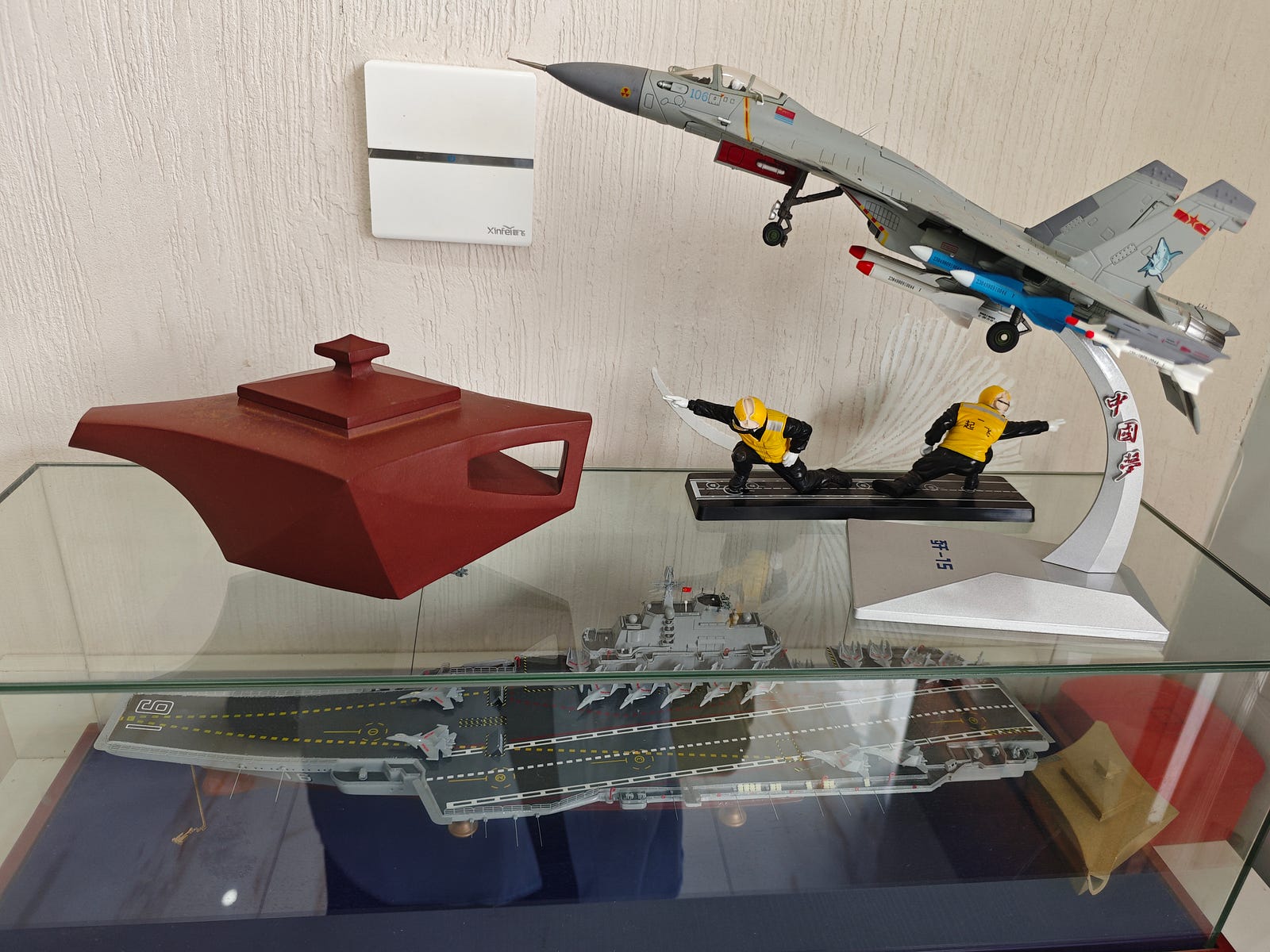
The regional culture is one of stark contrasts. One of its most famous fixtures, the xiyu (bathhouse)—an adapted holdover from the decades of Japanese presence in the region—embodies this directness. In true Dongbei fashion, people are completely unafraid to expose themselves, wearing their hearts on their sleeves.
A conversation with a local official in the bathhouse stood out in this respect. His manhood was on full, uninhibited display—just like everyone else in the room—as he enthusiastically rattled off industrial statistics. Did you know the region manufactures 40% of the brake pads used in New York school buses? Or that it played a foundational role in the nation’s early semiconductor and heavy machine tooling? Stripped of titles and clothes in the rising steam, the pride for his home was very apparent.
It seems the Dongbeiren have something that others don’t: their earnestness shining through in a way unique to a people that are honest with themselves, and with others. In speaking with many “southerners” they would tell me the Dongbeiren are honest, but the “hicks” of China.
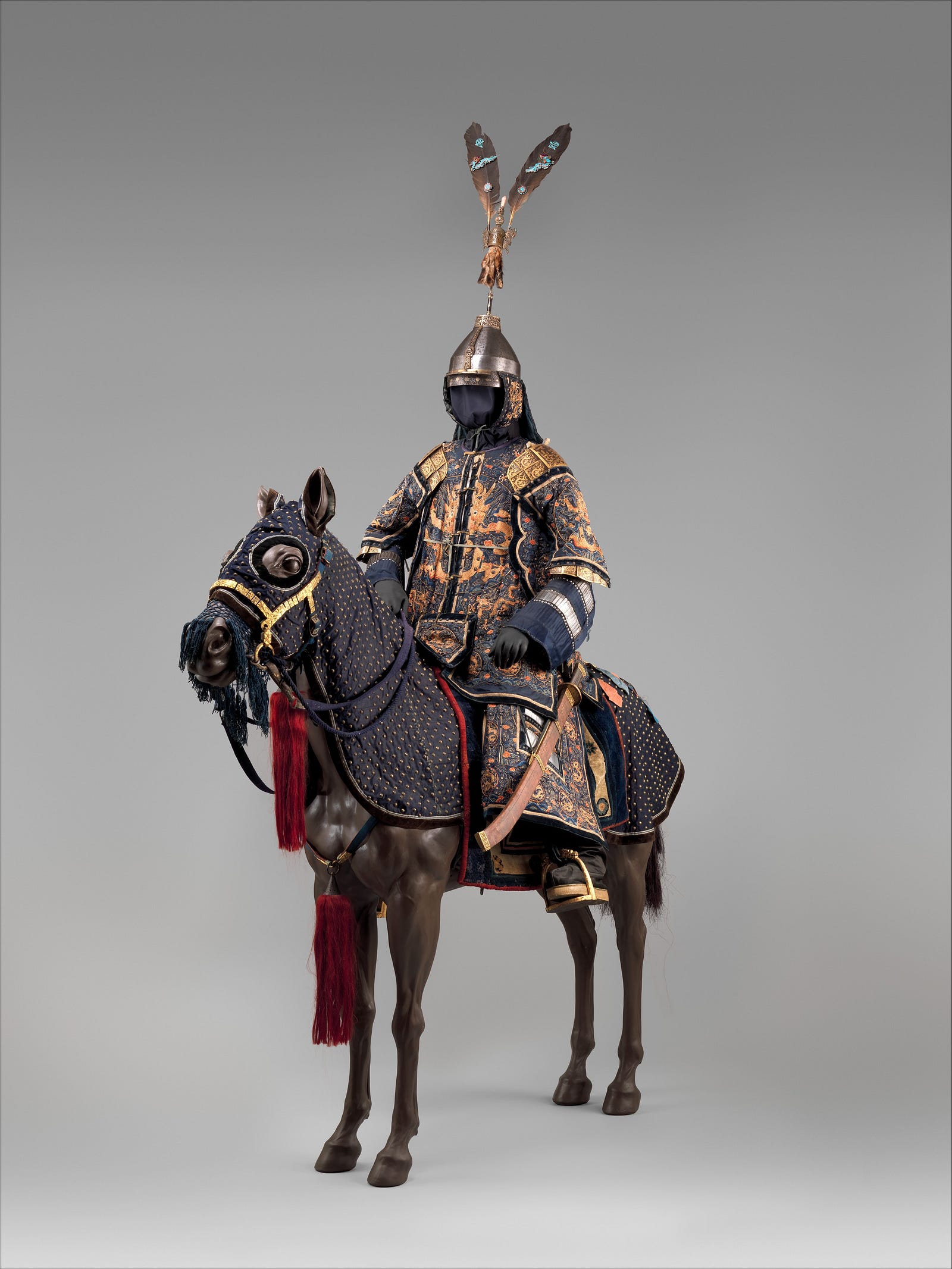
I can’t help but think back to FanDi’s strong sense of humour, wielded almost as a defense mechanism for my initial questions. It seemed a way to disarm my incessant requests about his way of life. In many ways, the portrayal of masculinity in China appears to be quite different to that of the west generally—but at least with those I met in Dongbei, their earnestness often paired with the strong walls they put up like a fine wine.
Even for the men I admire the most in the west, this can be a difficult balance to strike between armour and vulnerability. I can’t help but draw links here with the concept of “saving face” in China. Often it is actively encouraged to not show vulnerability, especially when you have done an act to “lose face.” And although I’m certainly not the authority on this concept, at least with my experience, the idea of “saving face” seemed less pronounced in the north as opposed to elsewhere in China. Definitely a welcome change, in my opinion.
I couldn’t help but think back to the Manchu and Mongol warriors that we had seen earlier on in the study tour. The translation had been quite poor, so I spent quite a long time admiring layered plates of iron, feather, and leather. The tour guide eventually reaching the exhibit that had caught my eye, she noted that the best warriors donned a combination of the three: so as to balance protection, and manoeuvrability.
Of course, it made sense: some things remain too heavy to carry around to carry around ones whole life.
On our final night, a severe storm hit, the beginnings of the category 5, cyclone Bavi. I struggled to get back in time for the closing ceremony, having to wade through waist-deep waters and detour around flooded city streets. And yet, when I finally arrived, FanDi was right there as usual, coordinating the late-night bus logistics through the rain.
As I was saying my goodbyes, I wished him and his family safety through the typhoon. Looking up at me with his a smile not too dissimiliar to his familiar larrikan-esque tone, he replied that his family was “in the sky.”
His tireless dedication, staying late into the night to help us and arriving early in the morning. Many hours of silly questions and his serious nature, broken only by humour: it all made sense to me then.
I told him that our entire group considered him a father figure, and that I was sure he had been a wonderful dad.
He called me a ‘pianzi’ (liar) once more: the smile on his face growing larger as he did.
Liaoning represents a profound portrait of humanity. Warmth, community, and rugged empathy sit directly alongside industrial grit, rigid control, and historical scars. Sitting on the northern plains that once decided the fate of empires, its people are honest, direct, and disarmingly kind.
Like FanDi, the rugged people of the North are made of both armour and vulnerability.