Voodoo, Mould, and Models: A Postcard from AGU
Notes from a hotel bar in New Orleans, fresh off the floor of the American Geophysical Union conference.
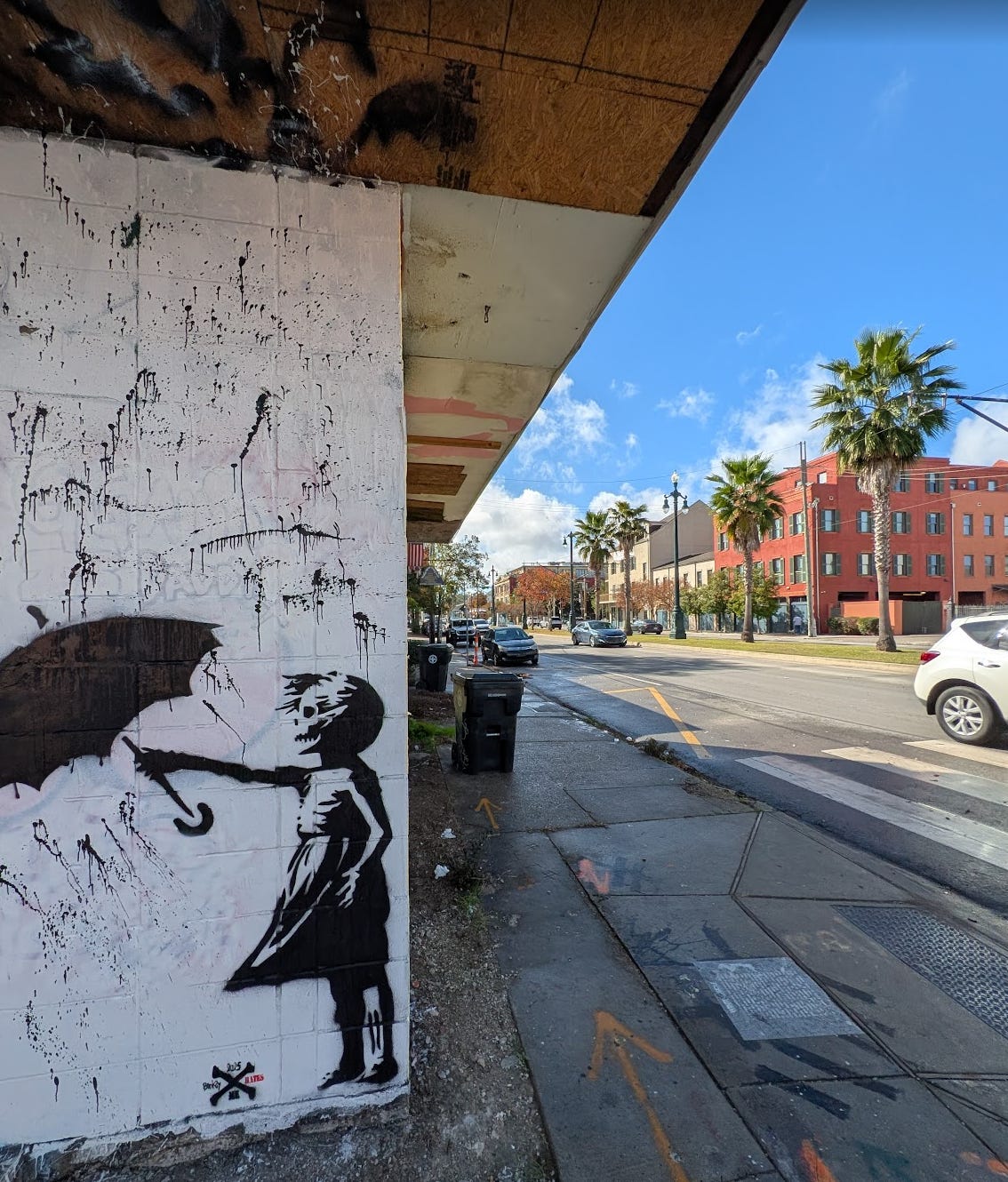
As I write this, I’m sitting in a little hotel bar in New Orleans, fresh off the floor of the American Geophysical Union (AGU) conference. I’ve had some thoughts.
The conference crowd is… funny. They are scientists, of course, and they contrast quite interestingly against the folks from New Orleans itself—a city described by my Uber driver as running on “voodoo.” I’m not someone who normally subscribes to the paranormal, but sitting here, I do get a bit of that feeling.
Take that Uber driver. On the ride back from the airport, he was telling me about the ghosts in his dining room. He walked in on them having lunch one day—Victorian-era clothing, blank stares, the works. Then there was the “beast” that charged him down in his kitchen. It sounds mad, but generally, I find that wherever there isn’t an immediate buck to be made—thanks, capitalism—Southerners are incredibly friendly and open with these stories.
One local, an older lady who was an uncanny Winona Ryder look-alike (she was naturally flattered by this), regaled me with tales of her family and their journey through Hurricane Katrina, almost 25 years ago now.
She described what it was like to return to the city after she and two million others fled at a moment’s notice. She found her whole life in ruins. She spoke of roaming packs of newly rabid dogs hunting in the streets, raiding old refrigerators. Those were the “lucky” dogs, the ones that could break down doors and windows. When I asked about the cats, she kindly requested I not inquire further, averting her gaze downward.
It took her and her husband 101 years—or so it felt—to get the house back. “Old Winona” told me how her husband could finally make their famous Po-Boys in the garden again (little Southerner’s tip: she swears you need to buy “home wrapping paper” to get the same flavour profile as the restaurants). Her husband was proud when he finally nailed the flavour. She told me this with a hint of sorrow, because he died shortly after. Lung cancer, or some lung-related illness. A parting gift from the mould he had to deal with when recarpeting the floors of their reclaimed home.
Climate scientists, on the other hand—and scientists in general—are a proud bunch. Always passionate, very smart, driven, and often quite empathetic. But it’s their strength and their curse that they are all too often focused on the minutiae of things. Model assumptions, minor corrections, large ensembles—these are their bread and butter.
But when the US—the largest polluter—doesn’t attend the world’s premier climate summit (COP31), and attendance is down 10,000 scientists at America’s largest climate conference (Where did they go? Hint: Unemployment), we need more than minutiae. Frankly, we need less arrogance around the science. Climate alarmism is a real thing, but fuck, we’re in some deep shit here, guys.
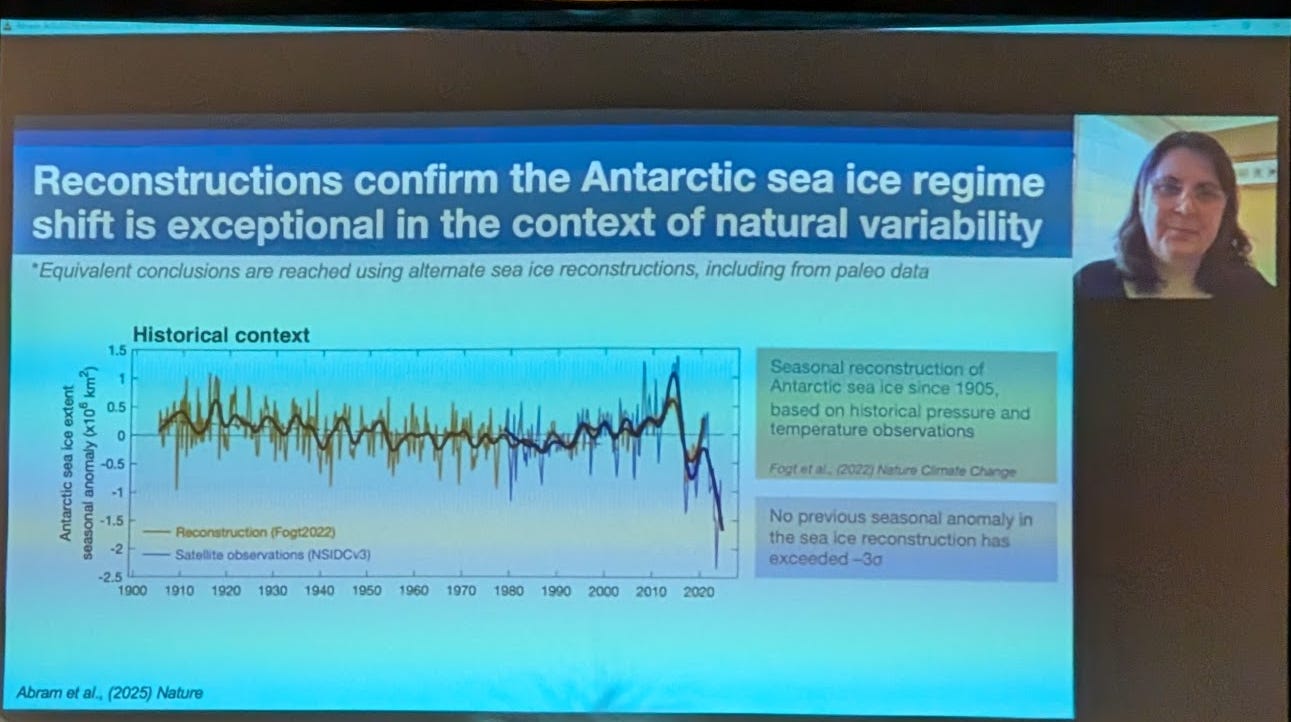
(Thanks to Nerilie Abram from the Australian Antarctic Division for the above talk - pictured is a spurious correllation between ice and time that has nothing to do with climate change or the collapse of antarctic sea ice)
It’s hard to judge as an Australian (though I’m usually quick to avoid judgment regardless), but there is this pervasive sense in the academic bubble that Southerners are “dumb” or “simple.” One climate scientist from the West Coast was very quick to correct me when I misidentified her as a Southerner; the look of shock and widening eyes, coupled with a slightly reddening face, revealed exactly what she thought of the locals.
I don’t know if I should say this, because I’ve had such great hospitality here, but I will say that Louisiana is a red state. in many ways, they actively voted for the policies that caused the anguish many climate scientists feel today. It is, therefore, quite ironic and sad that they will be some of the first to feel the effects of climate change.
I could point to the falling education and literacy rates or the economic woes of the state as underlying factors behind these voting patterns. But the real point I want to make is that we’re all on the same side. We have more in common than we might think, despite how it may seem.
We’re gonna need some real voodoo magic to get us out of this one though, guys.
(Carbon capture when?)